
Saudi Arabia has long been one of the world's most important energy economies. Oil has generated enormous government revenue, supported infrastructure development, and helped the country become a major player in global energy markets. But dependence on a single major source of income also creates risks. Changes in oil prices, global energy demand, technology, and the transition toward lower-carbon energy have encouraged Saudi Arabia to rethink its long-term economic model. This is the central idea behind Saudi Vision 2030.
Launched to transform the country's economy and society, the strategy aims to reduce dependence on oil while developing tourism, technology, manufacturing, logistics, entertainment, finance, renewable energy, and other sectors. The broader process of Saudi economic diversification is therefore not simply an economic reform program. It is an attempt to change how the country's economy generates investment, employment, government revenue, and international influence.
What Is Saudi Vision 2030?
Saudi Vision 2030 is a long-term national transformation strategy built around three broad themes: a vibrant society, a thriving economy, and an ambitious nation. The economic component focuses heavily on creating new industries and expanding the role of the private sector. Saudi Arabia wants to become more competitive in areas beyond traditional energy production. Key areas include:
- Tourism and hospitality
- Technology and artificial intelligence
- Logistics
- Manufacturing
- Mining
- Financial services
- Entertainment
- Renewable energy
- Sports
- Healthcare
- Real estate
- Advanced infrastructure
The strategy also aims to increase employment opportunities for Saudi citizens and encourage greater participation by private businesses.
Why Economic Diversification Matters
Oil remains extremely important to Saudi Arabia, but relying heavily on one commodity exposes an economy to global price cycles. When oil prices rise, government revenues can increase rapidly. When prices fall, fiscal pressure can become more difficult to manage. A diversified economy can provide additional sources of growth. For example, a strong tourism sector can generate employment and foreign spending. Manufacturing can create industrial jobs and exports. Technology companies can attract investment and develop high-value services. This is why Saudi economic diversification is becoming a central part of the country's long-term economic planning.
Moving Beyond Oil
Saudi Arabia does not necessarily need to eliminate oil from its economy. The more realistic objective is to use the country's existing energy advantages while developing additional industries. Oil revenues can help finance infrastructure, education, technology, transportation, and new investment. This creates an unusual economic strategy. Rather than abandoning its traditional strength, Saudi Arabia is attempting to use that strength to build a broader economic base. The challenge is ensuring that new industries eventually become productive and sustainable rather than remaining dependent on government spending.
Tourism Is a Major Priority
Tourism is one of the most visible areas of Saudi Vision 2030. For decades, Saudi Arabia's international economic identity was closely associated with energy and religious tourism. The country is now seeking to develop a much broader tourism industry. Investment has gone into hotels, resorts, airports, cultural attractions, entertainment venues, and large tourism developments. Saudi Arabia also wants to attract international visitors to historical and natural destinations across the country. A successful tourism sector could generate revenue while creating jobs across hospitality, transportation, retail, food services, entertainment, and construction.
Mega Projects and Economic Transformation
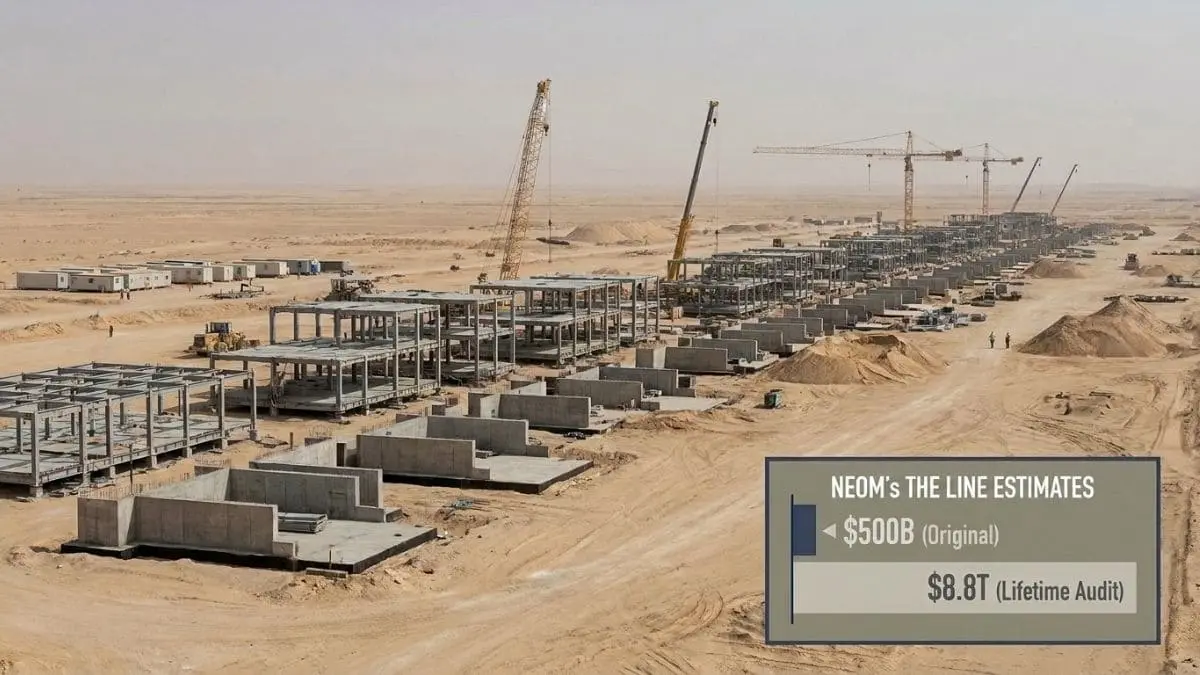
Saudi Arabia's transformation strategy includes several major development projects. These projects are designed to create new economic centers and attract international investment. Large-scale developments can include:
- Tourism destinations
- New urban districts
- Entertainment centers
- Industrial zones
- Technology hubs
- Logistics facilities
- Renewable-energy projects
The scale of these investments has attracted significant global attention. However, mega projects also involve substantial financial and execution risks. Large developments require enormous capital, skilled workers, infrastructure, and long-term demand. Their ultimate success will depend on whether they create sustainable economic activity rather than simply generating construction spending.
The Role of the Private Sector
A major objective of Saudi economic reform is increasing private-sector participation. Historically, the government has played a dominant role in many parts of the economy. Vision 2030 aims to encourage more private investment and entrepreneurship. A stronger private sector can help create employment, improve productivity, and reduce dependence on government-supported economic activity. Small and medium-sized businesses are particularly important because they can create jobs across a wide range of industries.
Technology and Artificial Intelligence
Technology is becoming another major pillar of Saudi Arabia's economic strategy. The country has invested heavily in digital infrastructure, cloud computing, artificial intelligence, and advanced technologies. AI is particularly important because it can support many industries simultaneously. Potential applications include:
- Smart cities
- Healthcare
- Energy management
- Financial services
- Transportation
- Industrial automation
- Government services
- Security
- Logistics
Saudi Arabia also has access to large amounts of capital that can be directed toward emerging technologies. The challenge is turning investment into local expertise, intellectual property, companies, and high-value employment.
Saudi Arabia's Growing Interest in Renewable Energy
Energy diversification is another important component of the country's economic strategy. Saudi Arabia has abundant sunlight and significant land resources, making solar power particularly attractive. Large renewable-energy projects can support domestic electricity demand while creating opportunities in engineering, manufacturing, construction, and technology. Renewable energy can also help Saudi Arabia prepare for changes in global energy markets. However, the country is unlikely to abandon hydrocarbons quickly. Oil and gas remain important sources of revenue and global energy supply. The more likely transition is toward a broader energy portfolio.
Mining as a New Economic Sector
Saudi Arabia has also identified mining as an important area for growth. The country has significant mineral resources, and developing them could support industrial expansion. Mining can create opportunities in:
- Mineral extraction
- Processing
- Manufacturing
- Infrastructure
- Logistics
- Export services
Developing a complete mining ecosystem could provide greater economic value than simply exporting raw materials. This fits directly into the wider goal of Saudi economic diversification.
Logistics and Geographic Advantages
Saudi Arabia has an important geographic advantage. The country sits between major markets in Asia, Europe, and Africa. Its location provides opportunities to develop logistics, ports, airports, warehousing, and transportation services. A stronger logistics sector could make Saudi Arabia an important trade and distribution hub. This also connects with the country's broader efforts to increase non-oil exports and attract international businesses.
Financial Services and Investment
Saudi Arabia has significant financial resources that can support economic transformation. The Public Investment Fund has become a major investor in domestic and international projects. Investment can help establish new industries and attract foreign capital. However, successful diversification requires more than financial investment. New sectors need competitive businesses, skilled workers, strong regulation, innovation, and customers. Capital can accelerate development, but it cannot guarantee commercial success.
Employment Is a Major Objective
Economic transformation is also closely connected to employment. Saudi Arabia has a young population, making job creation an important long-term priority. New industries can create opportunities for Saudi citizens in areas such as technology, hospitality, finance, engineering, healthcare, manufacturing, and entertainment. Increasing local participation in the private sector is therefore an important part of the broader transformation. Education and professional training will remain critical. An economy cannot become technology-driven without developing the workforce needed to operate advanced industries.
Foreign Investment
Saudi Arabia wants to attract more international companies and investors. Foreign investment can bring capital, technology, management expertise, global networks, and access to international markets. To attract investors, Saudi Arabia needs predictable regulations, strong infrastructure, skilled labor, transparent business processes, and competitive market conditions. The country's economic reforms have therefore included changes designed to make the business environment more attractive.
Challenges Facing Saudi Vision 2030
Despite the enormous opportunities, Saudi Vision 2030 faces significant challenges. The first is financial sustainability. Large infrastructure and development projects require substantial investment. If oil prices fall sharply, government revenues could come under pressure. The second challenge is execution. Building a major city, tourism destination, technology ecosystem, or industrial sector takes years. The third is demand. A new development may look impressive, but it needs businesses, residents, tourists, and customers to become economically productive. The fourth challenge is human capital. Saudi Arabia needs enough skilled workers and experienced managers to operate its expanding non-oil economy.
Oil Will Still Matter
It is important to understand that diversification does not mean oil is disappearing. Saudi Arabia remains one of the world's most important oil producers and is likely to remain a major energy supplier for many years. Oil revenues can also help finance the transition toward other industries. The real measure of diversification is therefore whether non-oil sectors can grow strongly enough to become increasingly important to economic activity and government finances.
Regional Competition Is Increasing
Saudi Arabia is not the only Gulf economy pursuing diversification. The United Arab Emirates, Qatar, and other regional economies have also invested heavily in tourism, finance, logistics, technology, and infrastructure. This creates competition for international companies, tourists, skilled workers, and investment capital. Saudi Arabia's advantage is scale. Its large population, substantial financial resources, geographic position, and domestic market provide opportunities that smaller Gulf economies may not have. The challenge is converting these advantages into productive economic growth.
The Importance of Global Investors
International investors will play an important role in determining the success of Saudi economic diversification. Investors look beyond government announcements. They consider whether projects generate sustainable returns, whether regulations are predictable, and whether businesses can operate competitively. Saudi Arabia therefore needs to demonstrate that its new industries can stand on commercial foundations. Long-term investor confidence can become one of the most important indicators of progress.
What Success Could Look Like
A successful diversification strategy would not necessarily mean that oil becomes unimportant. Instead, success could mean that Saudi Arabia has several strong economic pillars. These could include:
- Energy
- Tourism
- Manufacturing
- Mining
- Logistics
- Finance
- Technology
- Healthcare
- Entertainment
- Renewable energy
Such an economy would be better positioned to manage changes in global energy markets. It could also create more opportunities for citizens and attract greater international investment.
The Long-Term Outlook
The transformation described by Saudi Vision 2030 will take decades rather than a few years. Some projects will succeed, while others may be delayed, redesigned, or scaled back. That is normal for a transformation of this size. The important question is whether the overall direction produces a stronger and more productive economy. Saudi Arabia already possesses several powerful advantages: energy resources, financial capital, a strategic location, a large domestic market, and growing technological ambitions. If these strengths are combined with strong institutions, skilled workers, private-sector growth, and sustainable investment, the country could significantly broaden its economic base.
Saudi Arabia's transformation will ultimately depend on converting financial resources and ambitious projects into productive, sustainable industries.
Conclusion
Saudi economic diversification represents one of the most ambitious transformation efforts in the Middle East. Through Saudi Vision 2030, the country is investing in tourism, technology, manufacturing, mining, logistics, renewable energy, entertainment, finance, and other sectors while continuing to benefit from its position as a major energy producer.
The strategy offers enormous opportunities, but it also carries substantial risks. Large projects require capital, execution, skilled workers, and long-term demand. Diversification will ultimately be measured not by the number of projects announced, but by whether new industries generate sustainable economic activity.
Saudi Arabia has the financial resources and strategic advantages to pursue this transformation on a large scale. The next stage will be about turning investment into productive businesses, creating high-quality employment, attracting international capital, and building industries that can continue growing even as global economic conditions change.
If that transition succeeds, Saudi Arabia could emerge as a significantly more diversified economy while remaining one of the world's most influential energy powers. The broader goal of Saudi economic diversification will ultimately depend on whether these new economic pillars can become productive and sustainable over the long term.